
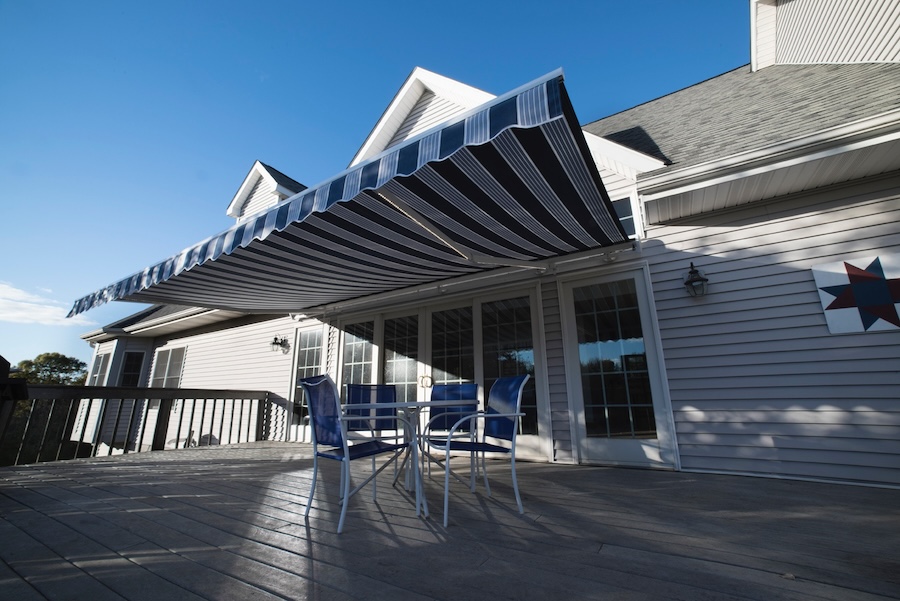


What Are the Best Retractable Awnings for South Jersey Homes?
Published on: 7/29/2026
6 mins read
The best
I've been installing
What Separates a Quality Retractable Awning From a Cheap One
Three things, and none of them are the thing most homeowners ask about first.
The frame. Cheap awnings use thin aluminum arms that sag within two summers. A quality frame holds tension evenly across the full width — no dip in the middle, no fabric pooling water after a storm.
The fabric. This one's bigger than people think, and I'll get into it below.
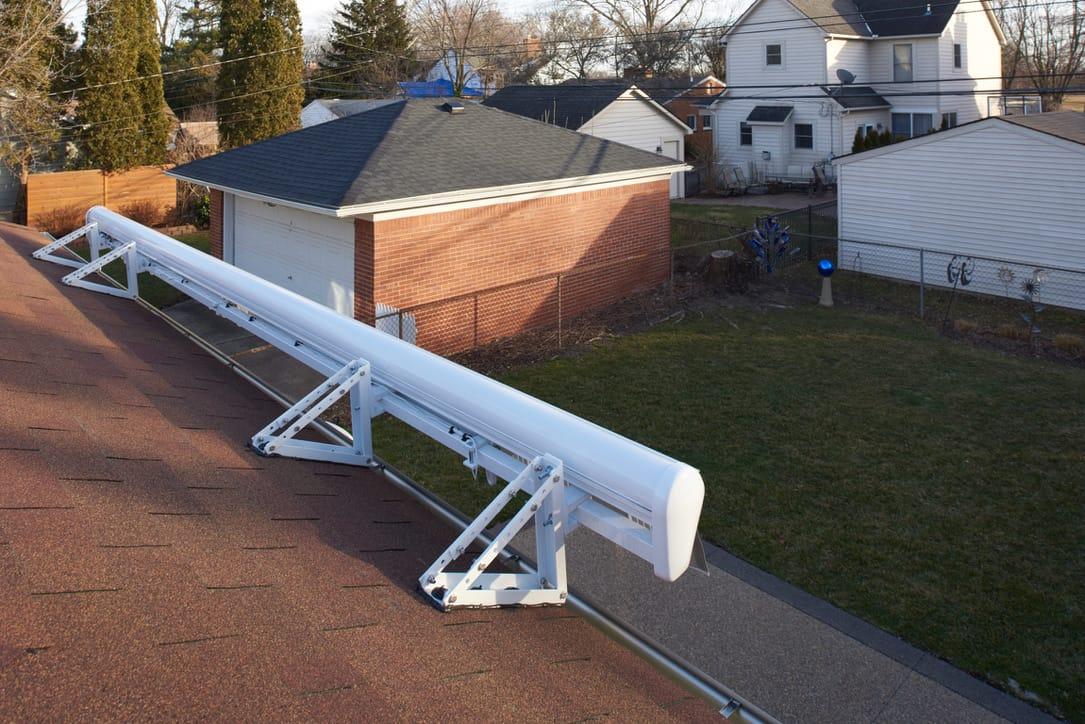
The mounting. An awning is only as strong as what it's bolted into. Fascia-mounted units need proper flashing and structural backing — not just screws into siding. This is where the “handyman install” corners get cut, and it's the difference between an awning that survives a nor'easter and one that ends up in your neighbor's yard.
If a quote doesn't mention frame gauge, fabric brand, or mounting method — ask. A real installer volunteers that information before you ask for it.
Manual vs. Motorized — Which One Actually Makes Sense
Everything else points toward motorized, especially on the shore. A crank-operated awning only gets used when someone remembers to crank it — which, in my experience, is about half as often as homeowners think. Motorized awnings retract at the push of a button, which means they actually go out on sunny afternoons and actually come in before a pop-up storm rolls off the bay.
Most of our shore-community installs also add a wind sensor. It retracts the awning automatically once gusts hit a set threshold — you don't have to be home, and you don't have to remember. For a house that sees coastal wind patterns nine months a year, that one feature pays for the upgrade by itself.
Bottom line: if budget allows,
Why SunPro and Sunbrella Fabric Matter in South Jersey
We're an authorized SunPro dealer, and we put Sunbrella fabric on almost everything we sell in Cape May and Atlantic County. There's a reason for that beyond brand preference.
Salt air breaks down cheaper acrylic and vinyl blends faster than people expect — fading, stiffening, mildew along the seams within a couple seasons. Sunbrella is solution-dyed, which means the color runs through the entire fiber instead of sitting on top of it. Salt air and UV exposure fade it slower, and it resists mildew far better than off-brand alternatives.
If you're within a few miles of the water — and in South Jersey, most of us are — fabric grade isn't a nice-to-have. It's the difference between an awning that looks new at year five and one that looks tired at year two.
Getting the Size Right
This is where most bad installs start — not with the product, with the measurement.
We measure in person, on site, before anything gets ordered — projection depth, mounting surface, roofline clearance, and how the sun actually tracks across your specific patio through the season. It's a 20-minute visit that prevents a five-figure mistake.
What Professional Installation Actually Looks Like
A proper install starts with a licensed contractor checking your mounting surface — not just showing up with the unit and a drill. That means confirming structural backing, correct flashing, and load capacity before anything goes on the wall.
Licensing matters here for a boring but important reason: liability. If
Installation itself typically runs a few hours to a full day depending on mounting complexity and whether electrical work is needed for motorization.
Cost, Financing, and What to Expect
Retractable awning pricing depends on width, projection, motorization, and fabric grade — there's no honest single number I can give you without seeing the space. What I can tell you is what drives the range: manual units sit at the low end, motorized with a wind sensor sits higher, and premium Sunbrella fabric adds a modest amount that pays for itself in how long the awning actually looks good.
Frequently Asked Questions
How much do retractable awnings cost in South Jersey?

What is the difference between manual and motorized retractable awnings?
Do retractable awnings hold up in South Jersey shore weather and salt air?
How long does it take to install a retractable awning in South Jersey?
What is the best fabric for a retractable awning near the Jersey Shore?
Do retractable awnings add value to a home in New Jersey?
Can retractable awnings be connected to a smart home system like Alexa?
Similar articles
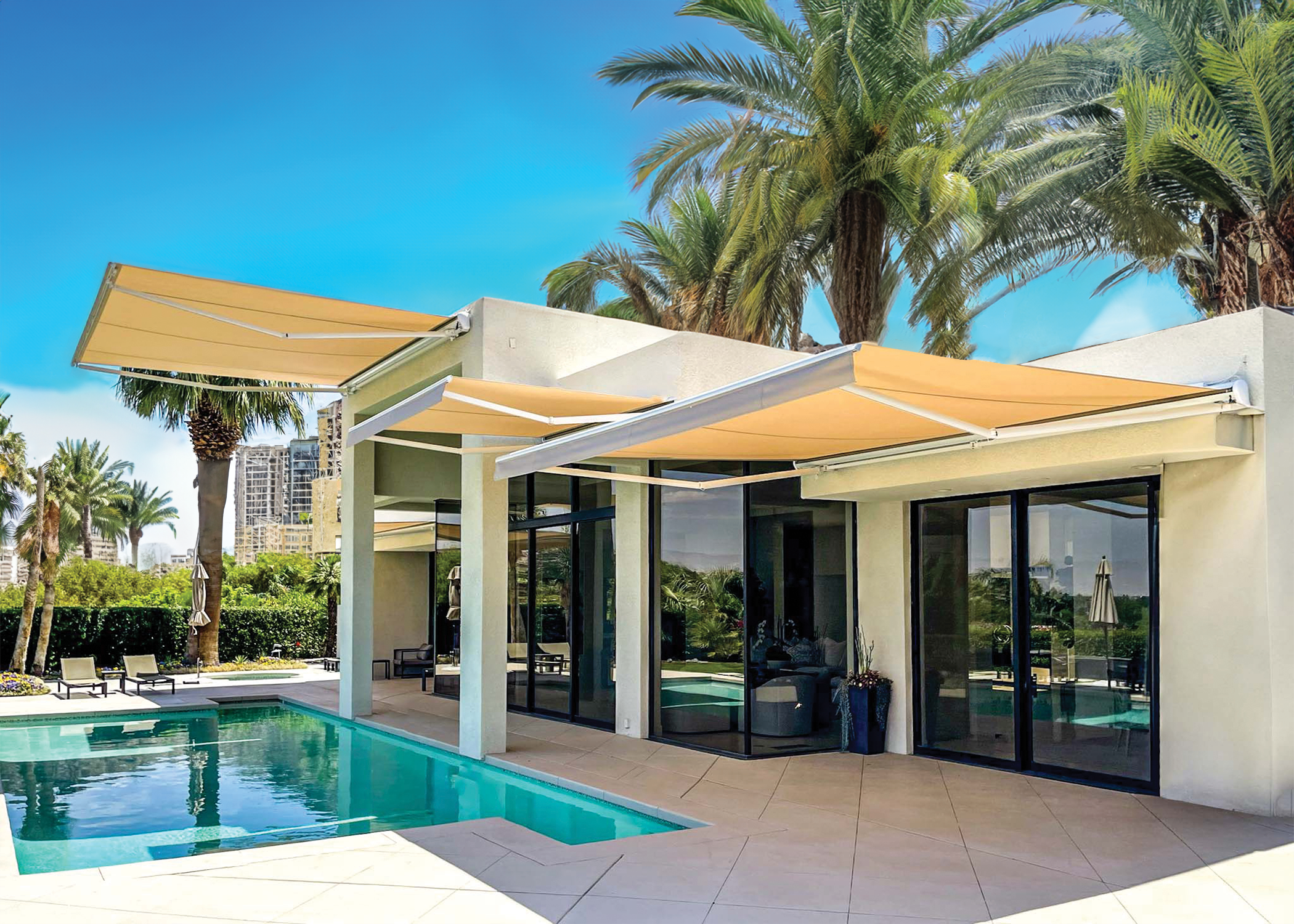
retractable awnings, retractable awning contractor, retractable awning installation
How Retractable Awnings Offer Flexibility for Your Outdoor Space
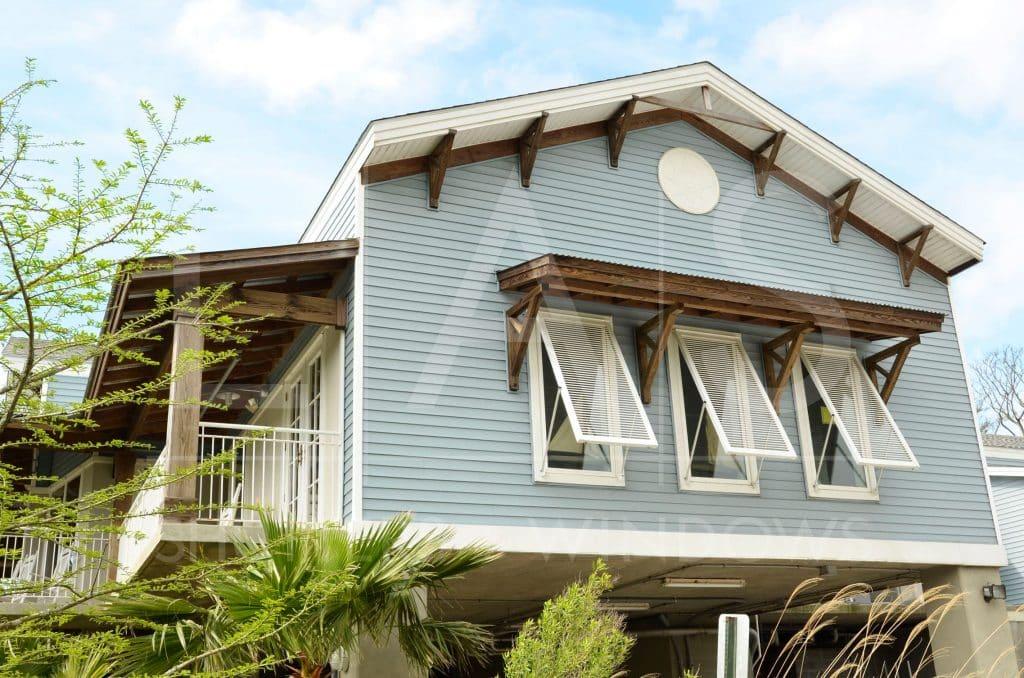
Cape May County, Ocean City, Avalon, Stone Harbor, LBI, Shutters, bahama shutters
What Are Bahama Shutters and Why Are South Jersey Shore Homeowners Choosing Them?
Pergolas, retractable awnings, patio enclosures
Retractable Awnings vs. Pergolas: Which is Right for Your Backyard?