


Which Window Treatments Save the Most Energy in New Jersey Homes?
Published on: 7/21/2026
9 mins read
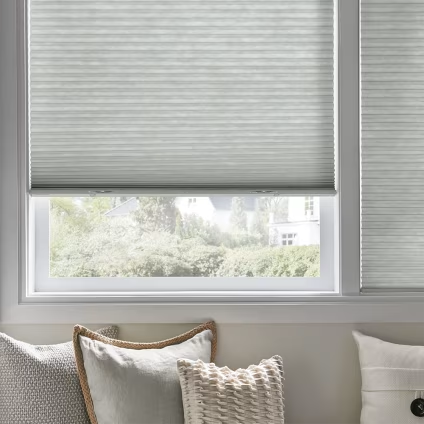
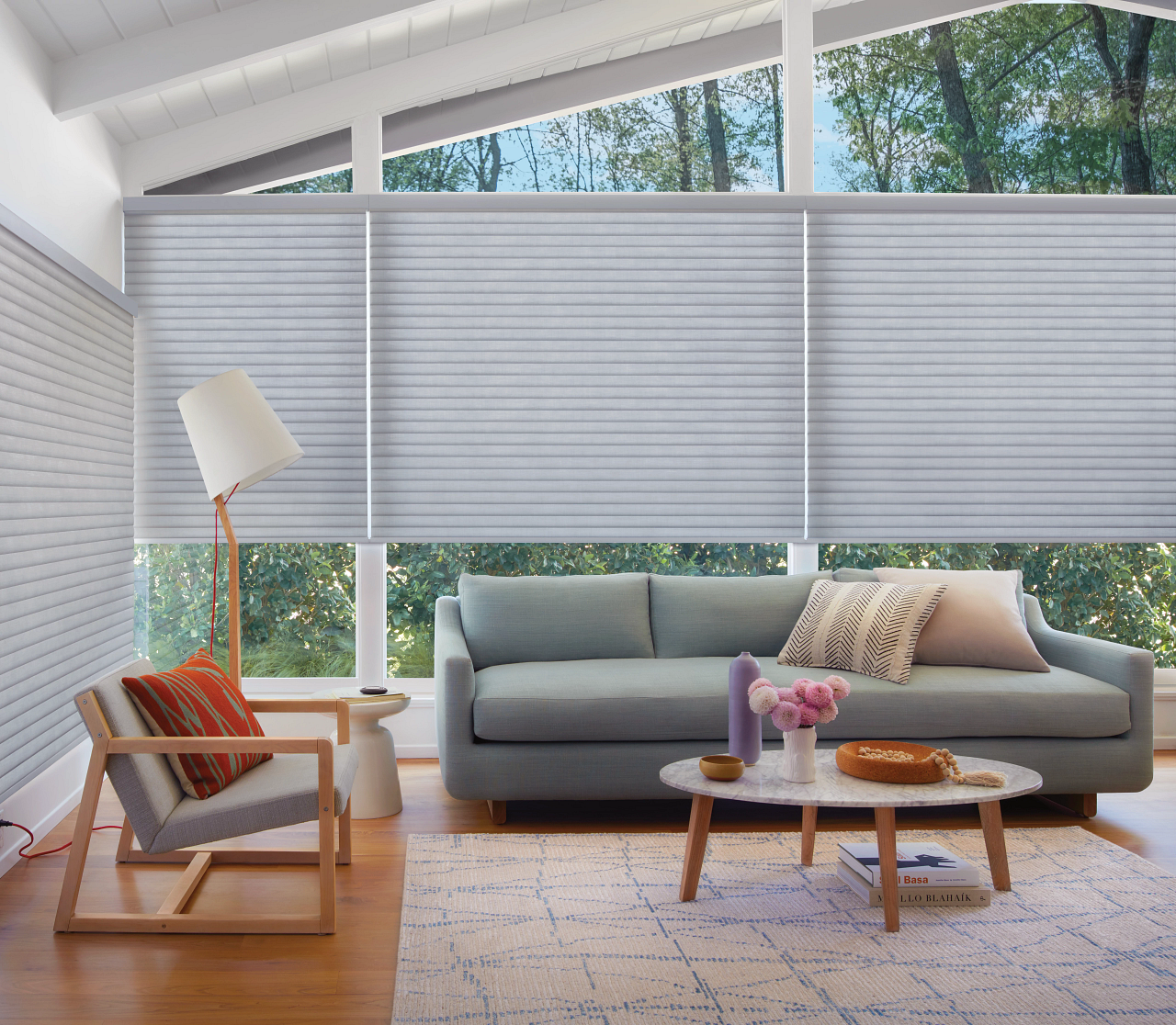
Honeycomb shades save the most energy of any window treatment we sell in New Jersey homes, and it isn't close. If your goal is the biggest drop in your heating and cooling bill, honeycomb — also called cellular — shades outperform plantation shutters and solar shades because of one simple thing: trapped air. But the full answer depends on which windows you're talking about, because the right product changes room by room. I've been installing
How Window Treatments Actually Affect Your Energy Bill
Here's the plain-English version, no physics degree required. Your windows are the weakest point in your home's insulation. A standard double-pane window has an R-value — a measure of resistance to heat flow — of about R-2 to R-3. Compare that to an R-13 to R-21 wall, and you can see the problem. In winter, heat pours out through that glass. In summer, it's the reverse: the sun heats your rooms and your AC fights back all day.
A window treatment doesn't fix the glass. What it does is add a barrier — either trapped air, a solid physical layer, or a reflective surface — between that glass and the room you're trying to keep comfortable. In a South Jersey home, where we get real winter cold off the Delaware Valley and real summer humidity near the shore, that barrier matters twice as much because your HVAC system is working both ends of the calendar.
The three products I recommend most for energy performance are
Honeycomb Shades: The Cell Structure and What R-Value Means
A single-cell honeycomb shade typically adds somewhere in the R-2 to R-4 range on top of your existing window. A double-cell shade — two rows of pockets instead of one — pushes that higher, often into the R-4 to R-8 range depending on the manufacturer and fabric weight. Layer that onto a standard South Jersey double-pane window and you can roughly double the insulating value of the window itself.
What that means for your bill: manufacturer and Department of Energy studies I've reviewed over the years consistently show honeycomb shades can reduce heat loss through a window by 40 to 60 percent when properly fitted and kept closed during peak heat-loss hours. In a drafty older South Jersey home — and we have plenty of those, especially near Haddonfield and Moorestown — that's not a marginal improvement. That's a noticeable difference in how a room feels in January.
Plantation Shutters as Insulation
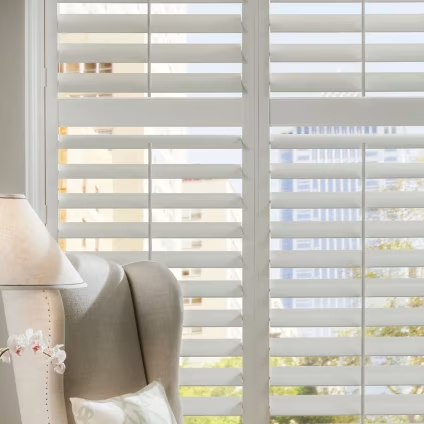
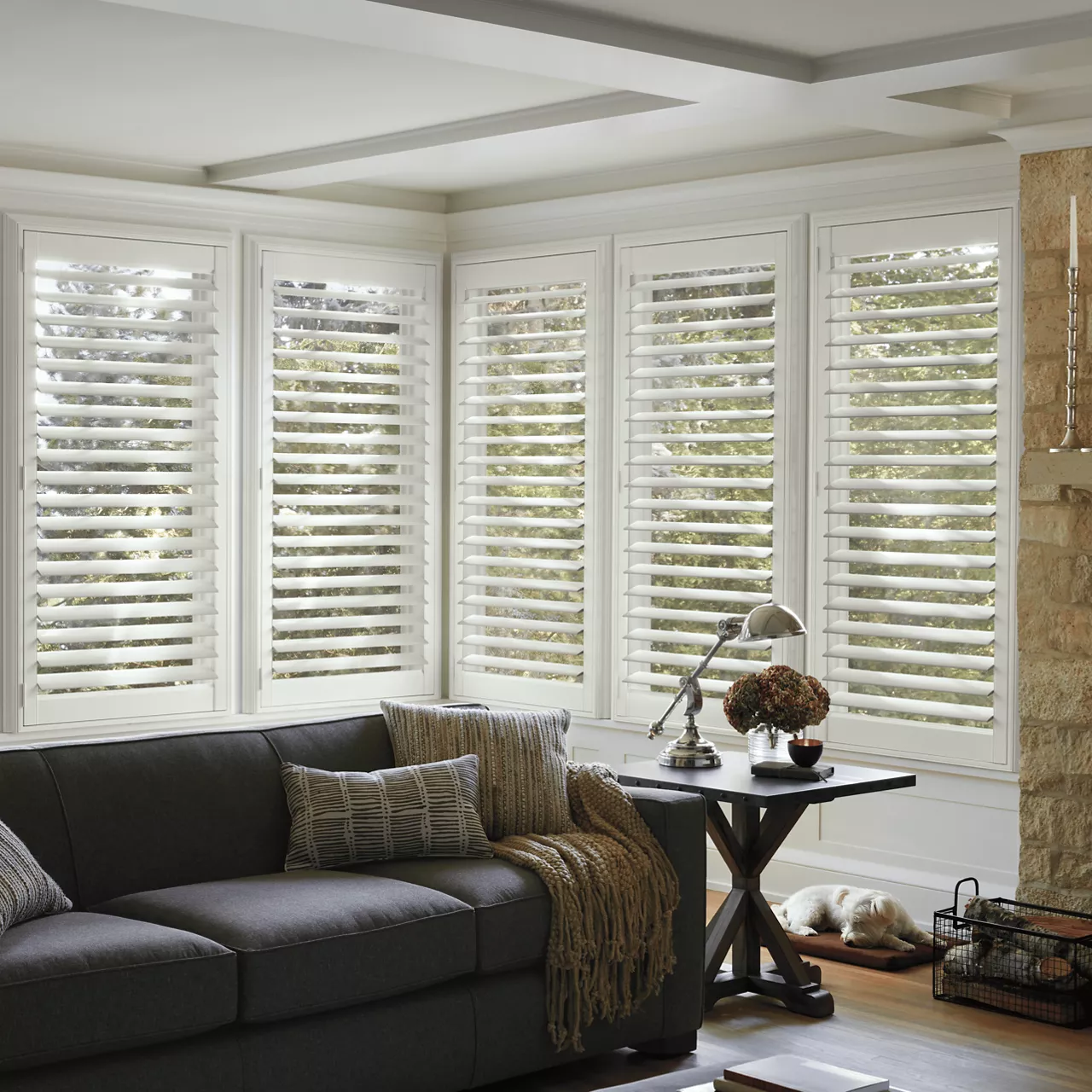
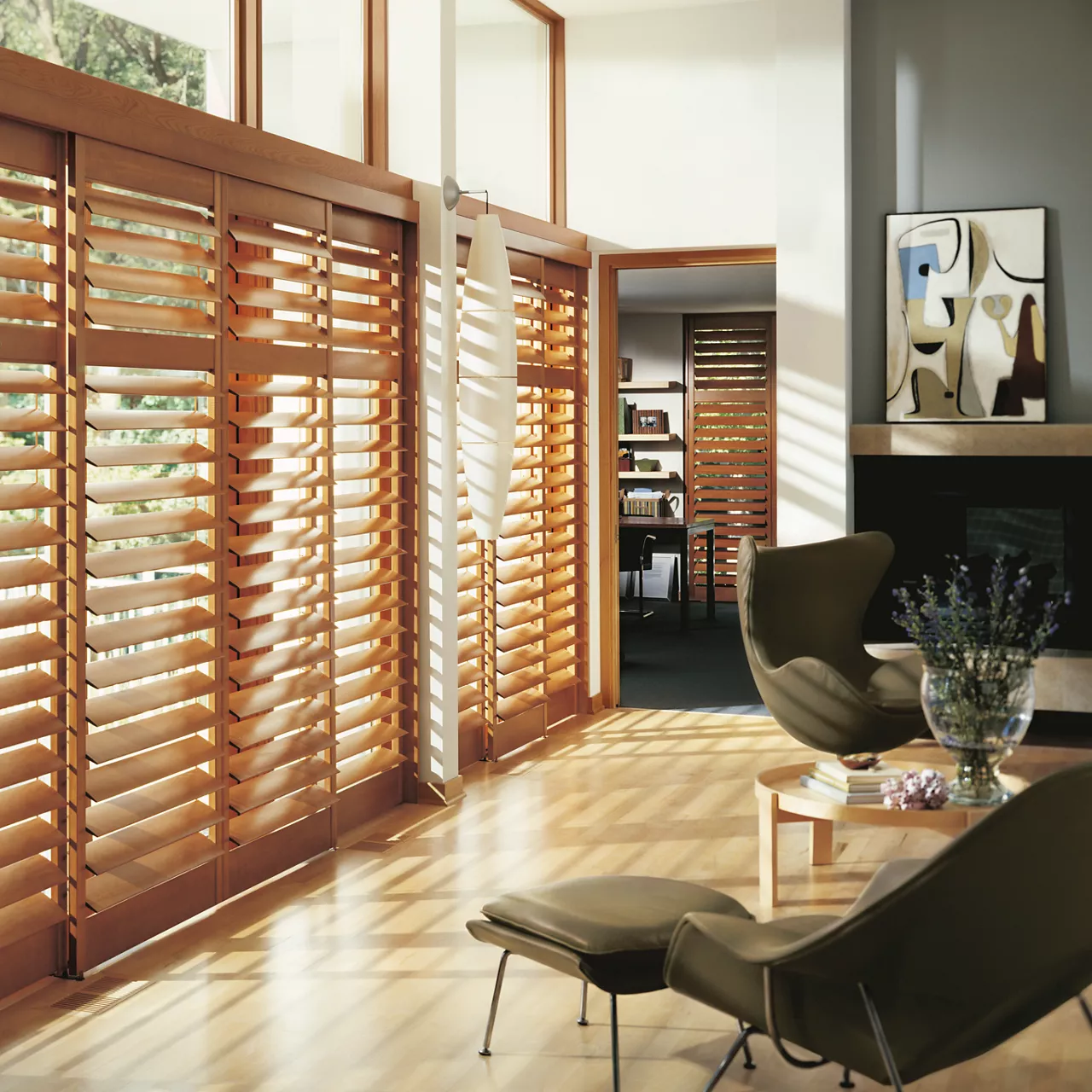
When louvers are closed and the panel is snug against the frame, you get a pocket of still air sandwiched between two solid surfaces — the glass and the shutter panel. That pocket behaves the same way as the honeycomb's trapped air, just in a bigger, less engineered form. A quality plantation shutter, properly fitted by someone who measures for the actual opening rather than a stock size, typically adds somewhere around R-2 to R-3 of extra insulating value.
That's less than a top-tier honeycomb shade on paper, but plantation shutters make up for it in a way spreadsheets don't capture well: they don't get replaced every eight to ten years like most fabric shades do. A well-built wood or composite shutter lasts decades in a South Jersey home, coastal humidity and all, so the energy savings compound over a much longer ownership period even at a lower per-window R-value.
Solar Shades for South-Facing Windows
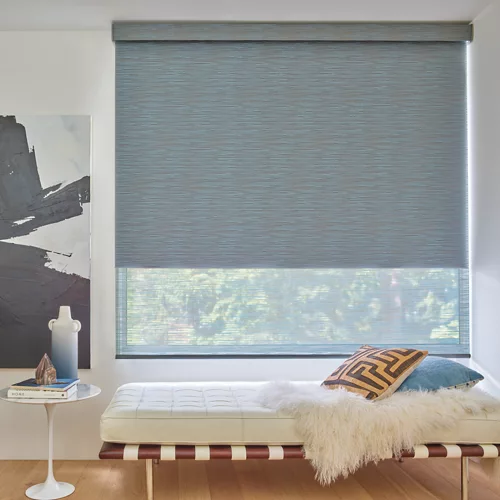
Solar shades are woven from a mesh fabric rated by "openness factor" — the percentage of light and heat allowed to pass through the weave. A tighter weave, lower openness percentage, blocks more solar heat before it ever hits your glass. Depending on the fabric, solar shades can cut solar heat gain through a window by 50 to 80 percent while still letting you see outside, which honeycomb shades and closed shutters don't allow.
For a South Jersey home with big south-facing windows — common in a lot of the newer shore-adjacent builds — solar shades are usually the smarter first purchase for summer energy savings, even though they don't do much for winter heat retention the way honeycomb shades do. This is exactly why I tell customers the "best" product depends on which window and which season is costing them the most.
NJ Utility Rebates and Federal Tax Credits
New Jersey doesn't currently offer a rebate specifically labeled for window treatments the way it does for insulation or HVAC upgrades, so I want to be straight with you rather than oversell this. Where the money actually shows up is the federal Energy Efficient Home Improvement Credit, and window treatments generally don't qualify under that program the way insulation, exterior doors, and qualifying windows themselves do.
What I tell every South Jersey customer: don't buy
ROI Comparison — 5 to 10 Year Outlook
Here's how I'd rank the three products if you're thinking purely dollars and years, based on what I've seen across hundreds of South Jersey installs:
Honeycomb shades deliver the fastest visible impact on your monthly bill, especially on north- and east-facing rooms where winter heat loss is the bigger cost driver. Expect a payback window of roughly 3 to 6 years on the incremental cost over a basic blind, depending on your current windows and how consistently you actually close them during cold snaps — and that last part matters more than people think.
My honest recommendation
Frequently Asked Questions
What window treatments are most energy efficient in New Jersey homes?

Do honeycomb shades qualify for energy rebates or tax credits in NJ?
How much can energy-efficient blinds and shades reduce a South Jersey heating bill?
What is R-value for window treatments and why does it matter?
Are plantation shutters more energy efficient than blinds or shades?
Do solar shades help with energy costs in South Jersey homes?
What is the most energy-efficient window treatment for a south-facing window in NJ?